
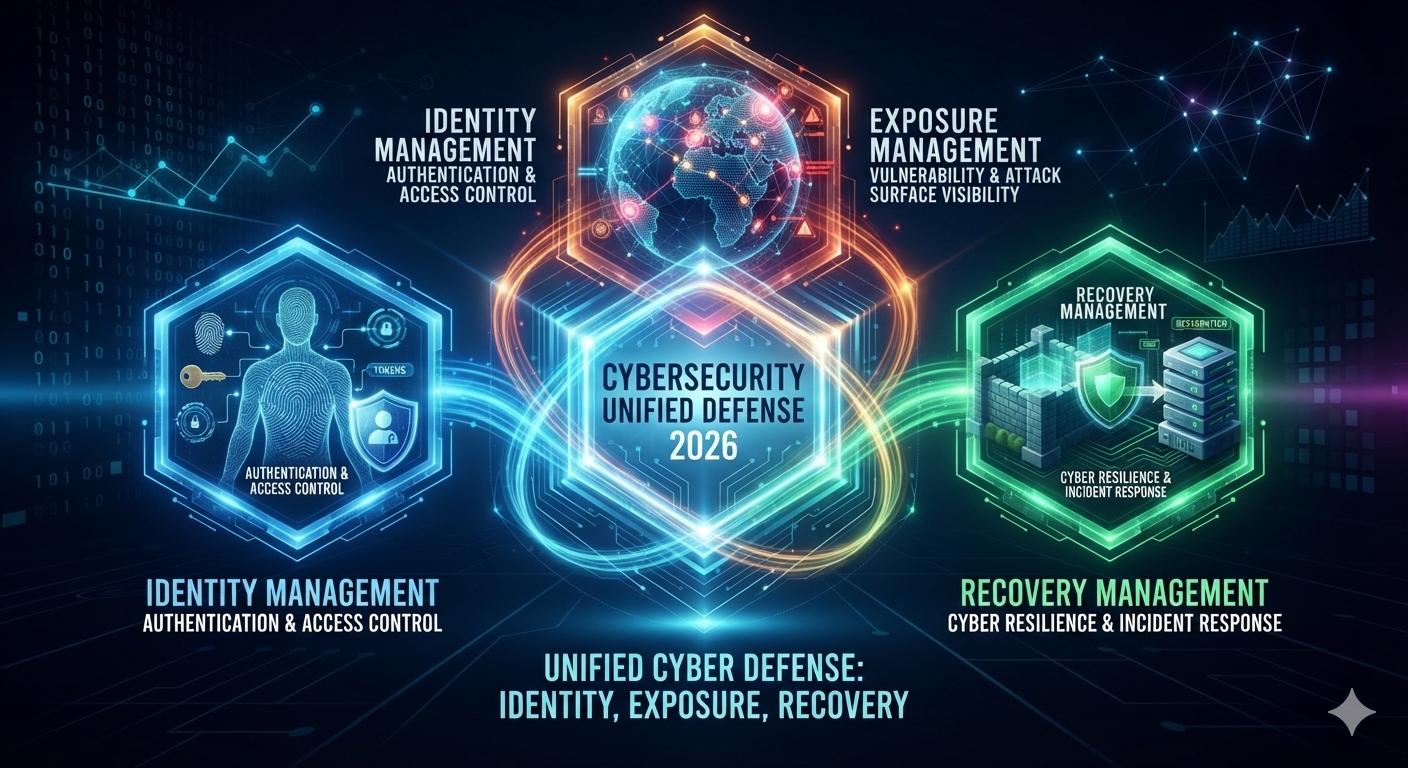
Cybersecurity is no longer only about preventing malware from entering a network. Recent threat research shows that attackers are increasingly combining identity abuse, unpatched internet-facing systems, trusted software processes and attacks on recovery infrastructure.
For businesses, this means a security programme cannot operate in separate silos. Identity and access management, endpoint protection, vulnerability remediation, backups and incident response must work together.
Identity is now a primary security boundary
Modern businesses depend on cloud applications, SSO, APIs and remote access. These services use tokens, assertions and credentials that can provide powerful access when stolen or misused.
NIST’s latest guidance highlights the need for stronger token validation, key management, lifecycle controls and monitoring. Businesses should know where privileged tokens are issued, how long they remain valid, who can revoke them and whether access is removed quickly during employee exits or a suspected compromise.
Endpoint security must cover trusted processes too
A recent software supply-chain incident demonstrated that a malicious package could execute when Python started—even without the affected application being actively used. Other investigations show that attackers can manipulate trusted update mechanisms for short periods, bypassing conventional point-in-time checks.
The lesson is clear: endpoint security must monitor behaviour, not only known malware. Security teams should watch for trusted software launching unusual scripts, unsigned files, PowerShell commands or unknown external connections. Developer systems, CI/CD servers and cloud credentials deserve the same protection as traditional user endpoints.
Vulnerabilities need an exposure-first response
Traditional monthly patching cycles are increasingly risky. Research from Rapid7 indicates that attackers may exploit high-severity vulnerabilities within days of public disclosure.
Businesses should not prioritise vulnerabilities only by CVSS score. The more important questions are:
- Is the system exposed to the internet?
- Is exploitation known or likely?
- Can an attacker exploit it without a password or user interaction?
- Does it provide a route to critical data, identity services or backup infrastructure?
- Is a compensating control in place until patching is completed?
This approach helps IT teams focus limited resources on the exposures that matter most.
Ransomware now targets recovery and administration layers
Ransomware operators are increasingly targeting VPN gateways, privileged access, virtualisation platforms and backup environments. An endpoint-only strategy is not enough if an attacker can reach vCenter, disable hypervisor controls or compromise a backup console.
Every organisation should test whether it can recover its critical systems—not just confirm that backups exist. This includes verifying immutable backups, separate backup administration, recovery credentials, restoration time and the ability to rebuild core identity services.
What Peritas recommends
Peritas IT Solutions helps organisations build practical, layered cyber resilience through:
- Identity and access security assessments
- Endpoint detection, response and managed monitoring
- Exposure-led vulnerability management
- Ransomware readiness and backup recovery reviews
- VAPT, security hardening and incident-response retainers
The goal is simple: reduce the paths attackers can use, detect suspicious activity early and ensure the business can recover quickly if an incident occurs.
Is your organisation prepared for identity compromise, a critical exposed vulnerability or a ransomware attack on its recovery systems? Peritas can help assess the gaps and create a prioritised remediation roadmap.